Stakeholder Comms
Stakeholder Deck Template
A decision deck for product managers, with the review rubric for every slide — what a senior reviewer checks, and how each slide fails in the room.
Free with a Thinkr account. The full template is on this page — the download is the working file.
Reviewed against
- 1. Context Summary
- 3. Initiatives Evaluation
- 4. Clarity of Thinking
- 9. Billing & Commercialization
- 10. Domain Gap Analysis
- 11. Synthesis & Final Verdict
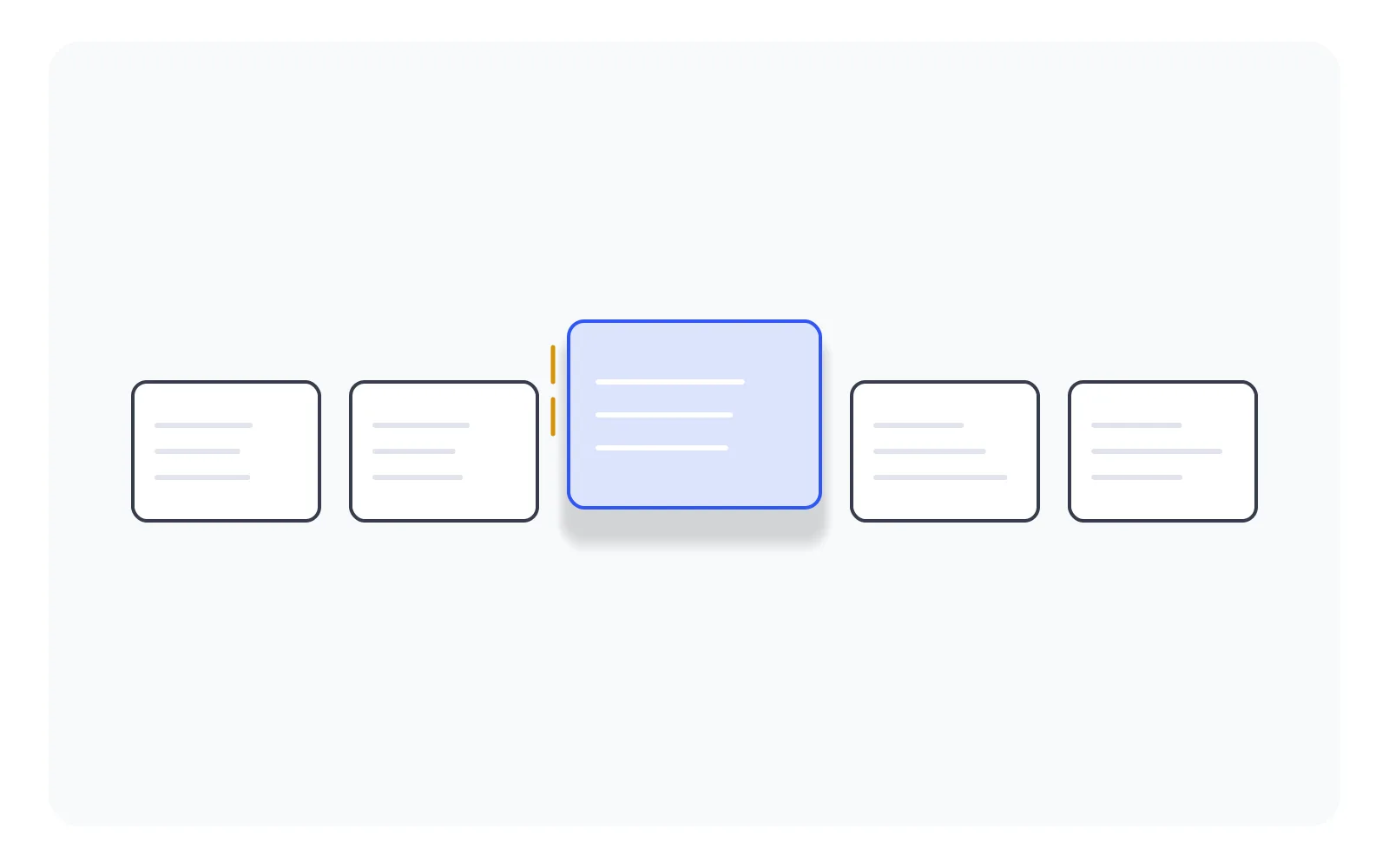
A stakeholder deck exists to get a decision out of a room. It is not a PRD in slide form and it is not a status update — it is an argument with an ask attached, and it fails when the audience finishes it unsure what you wanted from them.
When you need one
You need one when a decision requires someone who does not report to you: budget, headcount, a scope cut, a launch date, killing something. The test is whether the meeting has a decision-maker in it. If the answer is "I'm updating people," write an email — a deck will make the update longer without making it clearer.
You do not need one for anything already agreed. Rebuilding a settled decision into slides is how teams burn a week reopening a question the org closed.
The template
# [Product / initiative] — [the decision, in five words]
[Your name] · [Date] · [Decision needed by: date]

---

## 1. The ask
We are asking [role/group] to approve [specific thing] by [date].
If approved: [what happens next week].
If declined: [what we do instead].

---

## 2. What's true today
- [Metric with baseline, timeframe, source]
- [Metric with baseline, timeframe, source]
- [The one number that makes this urgent]

---

## 3. The problem
[One sentence: who is hurt, how often, how badly.]
Evidence: [research, tickets, revenue, churn — cite it]
Cost of doing nothing over [timeframe]: [number or explicit estimate]

---

## 4. What we considered
| Option | What it costs | What we get | Why not |
| --- | --- | --- | --- |
| [A] | [effort/time] | [outcome] | [reason rejected] |
| [B] | [effort/time] | [outcome] | [reason rejected] |
| [C — recommended] | [effort/time] | [outcome] | — |

---

## 5. What we recommend
[Option C], because [the deciding criterion — not a list of benefits].
Success looks like: [metric] moving from [baseline] to [target] by [date].

---

## 6. What it costs
People: [roles and duration]
Time: [start → ship]
Money: [budget, or "none beyond existing headcount"]
What we stop doing: [the tradeoff — never leave this blank]

---

## 7. What could go wrong
| Risk | Likelihood | If it happens | How we'd know early |
| --- | --- | --- | --- |
| [risk] | [H/M/L] | [impact] | [the signal] |

---

## 8. The decision
We need: [approve / reject / a named blocker removed]
By: [date, and why that date]
Open questions we are NOT asking you to resolve today: [list]
Section by section
1. The ask
The first slide states what you want and what happens either way. Everything after it is evidence for this slide, not a build-up to it.
2. What's true today
Shared baseline. Everyone in the room should leave this slide agreeing on the facts even if they disagree about what to do.
3. The problem
Who is hurt, how often, how badly. The cost of inaction is the slide people actually argue with, so put a number on it.
4. What we considered
The options table is the credibility slide. A deck with one option is not a recommendation, it is a request for rubber-stamping, and experienced reviewers read it that way.
5. What we recommend
One option, one deciding criterion. A list of benefits is not an argument — it does not explain why this beat the others.
6. What it costs
The tradeoff line is the one people skip and the one that gets the deck sent back. Every yes is a no to something else; say what.
7. What could go wrong
Risks with an early-warning signal attached. A risk you cannot detect early is a risk you have not thought about.
8. The decision
Repeat the ask, name the date, and list what you are explicitly not asking them to settle today. That last line is what keeps a decision meeting from becoming a design review.
Worked example
Here is slide 4 from a real-shaped deck — a payments team asking to rebuild checkout retries.
What we considered
Option What it costs What we get Why not Tune existing retry windows 1 eng, 2 weeks ~15% of failed charges recovered Ceiling is low; we tried this in Q1 Add a second payment processor 3 eng, 1 quarter ~40% recovered, plus redundancy Contract and compliance review adds 6+ weeks before any code Rebuild the retry engine (recommended) 2 eng, 6 weeks ~35% recovered, reusable for subscriptions — Recommending option 3 because it is the only one that also unblocks the subscriptions roadmap in Q4. Success: involuntary churn from 3.1% to below 2% by 30 November.
That slide is doing most things right — three real options, costs on all of them, a deciding criterion that is not "it's better."
The deliberate weakness: the recovery numbers have no source. "~35% recovered" is the number the entire ask rests on, and there is nothing telling the room whether it came from a model, a vendor benchmark, or a guess. In review this comes back immediately, and the honest fix is not to invent a citation — it is to write [TBD: modelled from Q1 retry logs, analyst review 8 Aug]. A stated known-unknown with a reason and a date survives scrutiny. A bare number does not.
Common mistakes
- Presenting the process instead of the decision. Slides about how you ran the research are for the appendix. The room wants the conclusion and the evidence, not the method.
- One option. Covered above, and it is the single fastest way to lose a room that has seen a few of these.
- Numbers without baselines. Every target needs the current value beside it or it cannot be argued with, which means it cannot be approved either.
- Blank cells instead of stated unknowns. A blank reads as an oversight.
[TBD: reason, date]reads as someone who knows where the edges of their knowledge are. - The ask that moves. Slide 1 asks for approval to explore; slide 8 asks for two engineers. Reviewers read this as a bait-and-switch even when it is just sloppy editing.
- Risk slides with no early signal. If you cannot say what would tell you the risk is materializing, you are listing anxieties, not managing risk.
Run it through a review
The rubric above is a subset of what Thinkr's critique runs against a full spec — eleven passes, scored across five dimensions, with the findings named rather than summarized. If you are about to walk a deck into a room, it is worth ten minutes to find out which slide comes back first.
© 2026 Thinkr. Free to use and adapt for your own product work, internally or commercially. Do not resell or redistribute this template as a template. Terms.